
Advanced Logosynthesis Training · June – August 2027
Core Beliefs —
A Logosynthesis and Redecision Therapy Program
You've completed the Basic Seminar. You understand the protocol. What you want now is a model that tells you precisely what you're looking at when core beliefs show up in session — where they were formed, what's maintaining them, and how to process them with Logosynthesis.

Session times
Each session runs 3 hours · exact dates to be announced (June – August 2027)
The clinical problem
Most approaches to core beliefs stop at the surface
They challenge the thought, dispute the assumption, or replace the narrative. That produces change — sometimes. But it rarely reaches where the belief was formed.
You've likely seen this. A client who knows, intellectually, that the belief isn't true — and still can't move. Because knowing isn't the same as resolution.
This Logosynthesis training gives you a framework that locates core beliefs precisely, and a method that resolves them.
You'll learn to see core beliefs differently — as more than cognitive patterns, with more to them than a thought to be challenged. You'll develop the formulation thinking that tells you what you're actually looking at when a belief shows up in session. And you'll practice using Logosynthesis to neutralize what cognitive-oriented modalities can point to but cannot reach.
The result: a clinical integration that changes how you work.
The lenses
Redecision Therapy and Logosynthesis® — a precise clinical sequence
Redecision Therapy
Developed by Robert and Mary Goulding, Redecision Therapy works directly with the early decisions written into the script — the conclusions a child made under real relational pressure that continue to shape what adults allow themselves to feel, want, do, or be.
It locates the belief at its origin: not as an abstract cognitive pattern, but as a decision made by a specific child in a specific scene. The therapeutic move is to return to that scene and make a new decision from a position of adult autonomy. Resolution, not management.
Logosynthesis®
Developed by Willem Lammers, Logosynthesis® works with the frozen energy bound in the representations that keep old conclusions in place — the internalized voices, images, and memories that continue to operate long after the circumstances that generated them are gone.
It dissolves what's maintaining the belief at the experiential layer beneath reasoning — reaching where Redecision Therapy has identified, and where cognitive approaches cannot follow.
Together they form a precise clinical sequence: Redecision Therapy to locate the belief and understand what was decided. Logosynthesis® to dissolve the energy keeping it frozen.
Schema Therapy is used in this program as a conceptual scaffold — a reference framework that most participants already speak, useful for orientation and comparison, not as the intervention model.
A note on integration. This formulation framework is an independent integration of these traditions, developed from therapy and supervisory practice. It does not represent the official LIA or ITAA curriculum and does not count toward certification requirements in either pathway.
Who this is for
For Logosynthesis Basic Seminar graduates ready to go deeper
You are a coach or therapist who has completed the Logosynthesis Basic Seminar and want to expand and deepen your application of the LS model.
You understand the Basic Protocol. You may have practiced it on yourself, with peers, or with clients. What you want now is a model that tells you what you're looking at when core beliefs show up — where they came from, what's maintaining them, which layer is active, and how to intervene precisely within your professional scope.
Coaches
Fully within scope throughout. The program makes the coach/therapist distinction practical, not just ethical — what each track can work with, and how far it can go. That clarity is built in from Session 1.
Therapists
Working within any integrative, somatic, or relational framework. Particularly relevant if your training includes TA, Schema Therapy, EMDR, IFS, or Somatic Experiencing — this program adds a precise formulation layer on top of existing competence.
What we work with
Three types of impasse — each requiring a different move
We work across three types of impasse, each formed at a different period of childhood, each requiring a different clinical approach. The program moves through them in sequence — building formulation precision at each type before the next is introduced.
Compensatory patterns Ages 6–12
The beliefs that keep a person functional but generate chronic pressure. Visible in behavior long before they're named as beliefs. We learn to read them, trace what they're compensating for, and use Logosynthesis® to neutralize them. This is the entry point for most clients — and the most accessible layer for coaches and therapists alike.
Early survival conclusions First 6 years
The decisions a child made about what is allowed — what they can feel, want, need, do, or be — in order to remain safe, loved, or connected. These weren't distorted thoughts. They were rational conclusions under real conditions. They live in the script quietly, beneath the compensatory layer above them.
The existential paradox First 2 years
The deepest type of impasse, where a person is caught between a fundamental want and an equally powerful prohibition against it. Not a belief about what's allowed, but a fracture in the wanting itself. Coaches work with this type representationally in the present. Therapists can accompany the client into the originating experience. Both approaches are covered.
The parallel map
We map this architecture alongside Young's early maladaptive schemas and CBT's core belief model — not to teach those frameworks, but to give participants a visual reference showing where their existing training ends and where this Logosynthesis® integration continues. If you speak Schema or CBT, you'll find your bearings immediately.
Program structure
Four sessions — dates to be announced
The model
We build the formulation model together. You'll leave with a clear map of the three layers, how they interact across time, and how to recognise each one in client material. We visualise the Redecision / Logosynthesis® framework alongside Schema Therapy and CBT — so you can locate yourself and speak across models.
Session focus: the first layer — compensatory patterns — their identification, their relational function, and using Logosynthesis® to neutralize them.
Formulation and practice
The second layer: early survival conclusions, the relational scene of origin, and the full three-layer formulation chain. We practice Logosynthesis® at this layer and close with structured practice and a brief for inter-session work.
Between Sessions 2 and 3: peer practice month. Practice in pairs using the Logosynthesis® Basic Protocol. Bring back what happened — what worked, what confused you, what the formulation missed.
Supervision and integration
We open in small groups to share what happened during the practice month. Then full-group facilitated review: what worked, what stalled, what the formulation misread. Live practice with real-time supervision.
We also introduce the third type of impasse — the existential paradox between wanting and prohibition — and how coaches and therapists each approach it within their scope.
Advanced formulation
Complex cases. The coach/therapist scope distinction becomes explicit and practical — when to work representationally, when regression is indicated. A supervised live demonstration. You are invited to bring a real client situation for case consultation.
We close with integration: the model in your own words, in your own practice.
Facilitator
Alan Rojas Yacolca
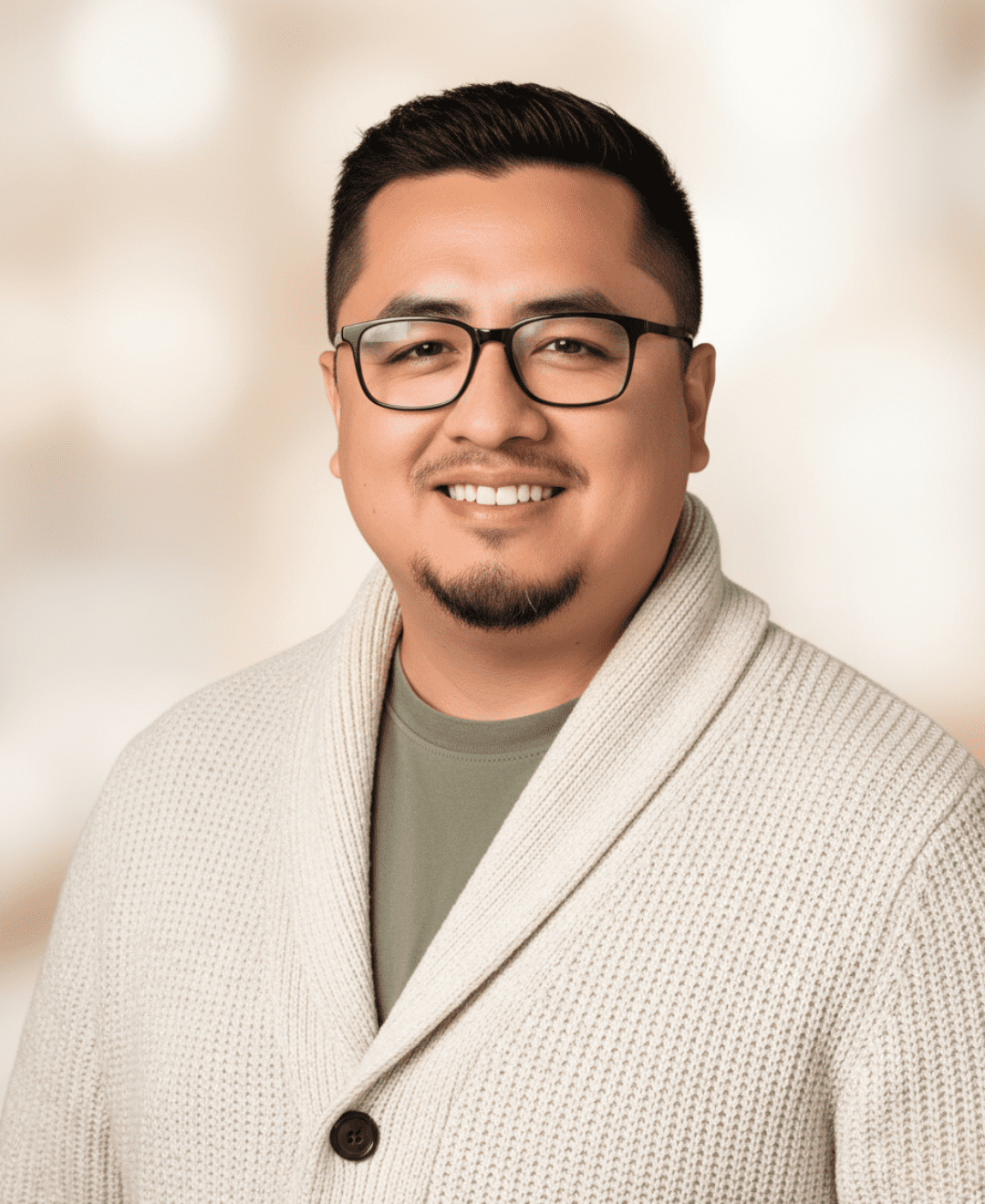
Alan is a Logosynthesis Practitioner and Instructor, integrative therapist, and supervisor with more than twenty years of experience across phenomenological, transpersonal, and integrative orientations. He is the only Latino Logosynthesis Practitioner and Instructor globally and works in English, Spanish, and French.
He focuses on developing professional skill through structured practice and guided integration — helping coaches and therapists sharpen case formulation, assessment, and intervention timing so their work becomes safer, clearer, and more effective under real conditions.
The supervision he brings to this program draws from the full range of his professional training: Redecision Therapy, Logosynthesis®, Transactional Analysis, NLP, and transpersonal frameworks.
Before you register
What to expect — and what this is not
What do I bring to the program?
Readiness to practice in pairs and small groups using the Logosynthesis® Basic Protocol. A client case or personal theme you are willing to work with across the program. Openness to have your formulation thinking examined and refined through supervision.
Can coaches participate fully, or is this limited to therapists?
Coaches are fully within scope. The program makes the coach/therapist distinction practical from Session 1 — what each track can work with, how far it can go, and what that looks like across the three types of impasse. You will not encounter a wall.
Does this count toward LIA or ITAA certification?
No. This program is an independent integration of Redecision Therapy and Logosynthesis® frameworks, developed from therapy and supervisory practice. It does not represent the official LIA or ITAA curriculum and does not count toward certification requirements in either pathway.
What if I can't attend one session?
Registration commits you to the full program — the four sessions build on each other deliberately. Individual session registration is not available. If you are looking for a different format, 1:1 supervision is available separately.
What are the group agreements?
Confidentiality: What is shared or practiced here stays in the room. No identifiable client details shared outside.
Consent and choice: You can pass, pause, or adjust your practice focus at any time.
Ethical scope: We practice within appropriate professional boundaries throughout. Scope by layer is explicit from Session 1.
Active participation: This program is built around practice. Attending to observe only is not the format.
A twelve-hour learning experience across four sessions, structured to build formulation depth across the full program arc. Each session connects to the next — the price reflects the complete program, not a series of individual workshops.
Delivered entirely in English. Dates to be announced.
Registration is now open
Payment confirms your place. Use the button below to register for the full program — four sessions running June–August 2027. Exact dates will be announced soon.
Questions before registering? Use the link above to book a free appointment.