Logosynthesis training · December – January · 12 CPD hours
Early bird €480 until November 15 · Only 12 seatsLogosynthesis in Action
Transdiagnostic Case Formulation & Intervention Lab: anxiety and depression
This Logosynthesis training starts from a simple observation. Anxiety and depression carry different labels, yet they share much of the same machinery: worry and rumination, a mind braced for what might happen, a harsh inner critic, avoidance, and a body that reacts before the person finds words. The lab teaches you to work with those shared factors, case by case, using Logosynthesis.
Instead of a separate protocol for each diagnosis, you learn to recognise these shared patterns when they show up in a session, and to work with them as they emerge.
Four live online sessions, three hours each, in a group of four to twelve. After the opening session, every session follows one rhythm: a demonstration, practice in triads, and a return to the group for feedback.
For psychotherapists, counsellors, and other helping professionals who have already been introduced to Logosynthesis.
Program details
Early bird until November 15.
If the group does not run, you are refunded in full.
Who this is for
You know the method.
Now work with what drives the symptoms.
This Logosynthesis training is for psychotherapists, counsellors, and other helping professionals who have been introduced to Logosynthesis. It does not teach the method from scratch. It teaches you to use it inside a case formulation for anxiety and depression: how the typical patterns look when they show up, and how to work with each one as it emerges.
What it is
- A continuing professional development (CPD) lab of 12 hours, recognized by Andes Institute
- Case formulation built around factors shared by anxiety and depression
- Live demonstrations by Alan, then your own practice in triads, then feedback in the group
- Skills you can apply to the anxious and depressed presentations you already meet in your practice
Scope and fit
- Education, not therapy. It is a space for developing professional skill
- It builds on an existing introduction to Logosynthesis and on the clinical training you already have
- If you become triggered during practice, Alan works with you live, in the group
The transdiagnostic idea
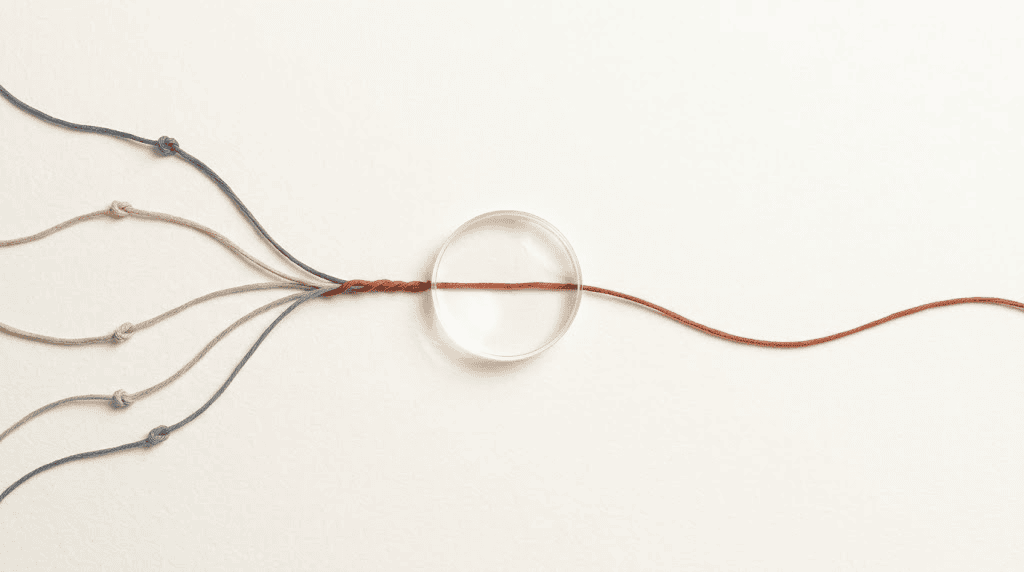
Different labels,
shared factors.
Research on transdiagnostic processes keeps finding the same drivers behind anxiety and depression. In this lab you learn to recognise them when they show up in a client, and to work with whatever emerges as you approach each one.
Emotional reactivity
Strong reactions and difficulty settling them.
Worry and rumination
Repetitive negative thinking that goes round and round and is hard to switch off.
Threat and uncertainty
Staying on high alert and finding it hard to tolerate not knowing.
Bodily sensations
Physical sensations that feel alarming and are hard to ignore.
Self-criticism
Harsh self-judgment, perfectionism, and little self-compassion.
Avoidance and suppression
Keeping away from situations, feelings, and thoughts.
What you will be able to do
Recognise the pattern,
work with what emerges
Formulating
- Describe a client's anxiety or depression through the shared factors, beyond the diagnostic label
- Recognise how the shared factors show up in this particular client
- Spot the typical patterns as they appear in session: worry, self-criticism, bodily reactions, avoidance
- Reassess after each intervention and update your formulation
Intervening
- Work with each typical pattern when it shows up: anticipation, the inner critic, a bodily sensation, avoidance
- Work with avoidance by approaching the stimulus step by step, so that what emerges shows you the trigger to process
- Explore held-back reactions through drawing and other creative forms, then process them
- Use Logosynthesis within a clear, transdiagnostic frame
How it works
Demonstrate, practise,
return and learn
Live online sessions of 3 hours: Dec 5, Dec 19, Jan 9, Jan 23.
CPD hours, recognized by Andes Institute.
People per practice triad: client, practitioner, observer. Sessions 2 to 4.
Participants. Small enough for individual feedback.
Session by session
Four sessions, one frame
The transdiagnostic map
Why anxiety and depression share so much. A case formulation frame built on shared factors: how to recognise the typical patterns when they show up in a client. Alan demonstrates the full cycle.
Theory and demonstration.
Anticipation and the body
Worry, rumination, attention to threat, and difficulty with uncertainty. Bodily sensations that act as triggers. Working with each pattern as it shows up, and following what emerges.
Demonstration, practice in triads, feedback in the group.
The inner critic
Self-criticism, low self-compassion, and perfectionism. Emotional reactivity and what sits beneath it. Working with the message and with the inner figure behind it.
Demonstration, practice in triads, feedback in the group.
Distance, avoidance, and putting it together
Avoidance and suppression as distance from the stimulus. Creative art forms for held-back reactions. Sleep disturbance. You assemble your own formulation for an anxiety or depression case, from the shared factors to the patterns you meet in session.
Demonstration, practice in triads, feedback in the group.
A learning space
Education, not therapy.
Support is in the room.
Practising Logosynthesis with colleagues can touch personal material. The lab is designed as professional education, and participation in the personal side of practice is voluntary. If something activates you during practice, you return to the group and Alan works with you there and then.
The facilitator
Twenty years of clinical practice,
taught as skill.

Alan Rojas Yacolca
Logosynthesis® Practitioner and Instructor · Integrative therapist · Supervisor · Founder, Andes Institute
Alan Rojas Yacolca is a Logosynthesis® Practitioner and Instructor, integrative therapist, and supervisor, and the founder of Andes Institute. He has more than twenty years of clinical experience across phenomenological, transpersonal, and integrative orientations. He works in English, Spanish, and French.
He focuses on developing professional skill through structured practice and guided integration, helping therapists sharpen case formulation, assessment, and intervention so their work becomes clearer and more effective under real conditions. In this lab, that means learning to see what anxiety and depression have in common in a given client, and to act on it.
His teaching draws on Redecision Therapy, Gestalt, Logosynthesis®, Transactional Analysis, NLP, and transpersonal frameworks.
Schedule
Four Saturdays.
Check your local time.
Dates
Dec 5 · Dec 19
Jan 9 · Jan 23
Time
3:00 – 6:00 pm
GMT / UTC
Total
12 live hours
12 CPD hours
All four sessions run at the same time, 3:00 – 6:00 pm UTC. None of the places below changes its clocks between these dates, so your local time stays the same for every session.
| Where you are | Local time, all four sessions |
|---|---|
| US / Canada Eastern time | 10:00 am – 1:00 pm EST |
| US / Canada Pacific time | 7:00 – 10:00 am PST |
| London United Kingdom | 3:00 – 6:00 pm GMT |
| Central Europe Spain, France, Germany, Netherlands, Switzerland | 4:00 – 7:00 pm CET |
Somewhere else? Convert 3:00 – 6:00 pm UTC. We recommend adding the four dates to your calendar as UTC entries.
Questions
Before you register
Do I need prior Logosynthesis training?
Yes. You need a prior introduction to Logosynthesis. The lab uses the method but does not teach it from scratch. If you are unsure whether you qualify, book a call before paying.
Is this therapy or a psychotherapy group?
No. It is continuing professional development for practitioners. Participation in the personal side of practice is voluntary. If you are activated during practice, Alan works with you live, in the group.
Is the lab only about anxiety and depression?
That is the focus. The transdiagnostic frame, however, rests on factors that also appear in many other presentations, so the skills carry over beyond these two.
What happens if the group does not fill?
The lab runs with a minimum of four participants, and the group is limited to twelve. We confirm by November 25. If it does not run, every payment is refunded in full.
How do the payment options work?
The early-bird price of €480 is a single payment, available until November 15. After that, the single payment is €540. You can also pay in two instalments of €275 (total €550): the first when you register and the second by January 15.
Secure your place
Twelve seats.
Group confirmed by November 25.
The lab runs with four or more participants and is limited to twelve. Choose how you want to pay. Four sessions, 12 CPD hours.
If the group does not reach four participants, it does not go ahead and every payment is refunded in full. We confirm by November 25.
If you pay in two instalments, you will be invoiced personally before the second due date.
Admission requires a prior introduction to Logosynthesis and a professional helping role.
If you are unsure whether you qualify, book a call before paying.
By paying, you confirm that you meet the admission requirements and are registering in a professional capacity.